Showing posts with label 21st century pedagogy. Show all posts

Monday, 7 March 2016

Mindlab by Unitec: My Postgraduate Learning Journey

07 March 2016 (APC Week 32 - Task 10)
Putting It All Together
It's important for all of us as professional educators to both understand and evaluate our own practise. Osterman & Kottkamp (1993) offer us a useful model that links in well with the practical aspects of developing a pedgogical approach.
Figure 1: Osterman & Kottcamp (1993) - Source Article

My experiences over the course of the past 32 weeks for my Mindlab studies has certainly provided me with a greater understanding of what Teaching As Inquiry looks and feels like 'in action'. I for one now firmly believe that the professional awareness that this approach generates within us can have a positive lasting impact on how I approach my own leading and learning roles in future.

Being able to reflect on my own practise whilst  experiencing new professional experiences has been both eye opening and horizon broadening. Meeting and collaborating with educators from around the country (and even overseas) as part of my studies has been a revelation that has extended my own view of the profession well beyond geographical boundaries and current points of view. 

In a New Zealand educational context, the Ministry of Education has set criteria for practising teacher in e-learning. For the reflective purposes of this blog entry, here's some evidence  from my studies to support a few of the criteria I have met well over the past 32 weeks...

When reviewing how I have used this "Professional knowledge in practice", Criteria 7 leaps to my attention: how I "Promote a collaborative, inclusive, and supportive learning environment". Plenty of evidence of this is freely available on our class blog and learning hub website that I have collaborated on with my colleagues. Many of the posts on this blog also demonstrate how I have been sharing what I have learned with my wider community of practise, too.

Looking at the criteria around "Professional relationships and professional values", two immediately spring to my attention as having been well met over the course of my studies, and within my teaching practise for many years now.

"Criteria 3: Demonstrate commitment to bicultural partnership in Aotearoa / New Zealand." Apart from this being a strong underpinning element in several of my internally submitted essays for my recent studies, my recent blog entry on cultural inclusiveness effectively summarises my own understanding and drive to include this as part of my pedagogical and ethical approach to my leading and learning.

As a useful segue, "Criteria 4: Demonstrate commitment to ongoing professional learning and development of professional personal practice" also leads me to the final part of this blog entry...


Where to Next?
I've long questioned the established ways of doing things, and my being open to new ways of leading and learning have been a definite asset for this course of study. It seems to me as if the opportunities are only as limited by our own individual and collective vision(s) when it comes how we might move forward from here...

My 'Big Question' for RCIP two months ago - the question now, for me is, do I limit my understanding of a Community of Learning to a geographically bounded area, as a simplistic case study that can be replicated elsewhere - or begin to consider myself a part of a global community of learning...

The academic research and case studies I've viewed fill me with a quiet optomism as to where it all may lead; and the cautionary tales and as yet under-researched areas should likely encourage each of us to look beyond traditional methodologies. There's definitely an opportunity there for me to consider studying at Masters level in future, or to at the very least encourage others to pursue this avenue.

I myself am left with a keen interest in exploring newer, more inclusive pedagogical approaches that will likely make the most of our increasingly global contexts. It's not just about hoping that innovation occurs in a timely manner and going with the proverbial flow anymore:

I firmly and passionately believe that it's vitally important for all of us as whanau  and educators alike to consider how we can  actively partcipate in changing the paradigms that we lead and learn within, as we begin to deliberately coach and mentor our students and colleagues in this new age of digital and collaborative learning...! 
 
References Cited
Osborne, M. J. (2016, 1st February). My RCIP Reflective Portfolio. [Blog Entry] Retrieved from http://postgradteacher.blogspot.co.nz/2016/02/mindlab-by-unitec-my-rcip-project-plan.html on 28th March 2016. 
Osborne, M.J. (2016, 29th February). Cultural Responsiveness within a NZ Context. [Blog Entry] Retrieved from http://postgradteacher.blogspot.co.nz/2016/02/mindlab-by-unitec-evaluating-my-own.html on 28th March 2016
Osterman, K. & Kottkamp, R.(1993) Reflective Practice for Educators. California. Cornwin Press, Inc. Retrieved from http://www.itslifejimbutnotasweknowit.org.uk/files/RefPract/Osterman_Kottkamp_extract.pdf on 28th March 2016.
Ministry of Education (NZ). Practising Teacher Criteria and e-learning. Retrieved from http://elearning.tki.org.nz/Professional-learning/Practising-Teacher-Criteria-and-e-learning on 28th March 2016

Monday, 8 February 2016

Mindlab by Unitec: Global and Local Trends in Education

08 February 2016 (APC Week 29, Task 6)
Reflecting on Some of the Current Trends in Education

When we're considering 'where to next', it's important that we consider the issues and trends that are likely to influence education over the next ten to twenty years. Looking first at the international trends helps us to see the bigger picture as it were. 

In the "Global Trends 2030: Alternative Worlds" report released by US National Intelligence Council (2012), they found four significant 'megatrends' that will likely have a huge influence on the geopolitical framework our education systems take place within.
Screenshot from "Global Trends 2030" pp.7 (Source)
The use of online digital media is now widely being used to allow for both collective and individual empowerment at a scale that has been previously unequalled. 

We're able to find out and share ideas online like never before, with learning-based and social media websites allowing individuals  to collaborate in a manner that is likely to be a potential source of both innovation and fundamentalism. In essence, we're all at a bit of a nexus - those clinging on to traditional modes of thought may find the 'future is wide open' and wish to keep the status quo.

Essentially, it has become imperative that educators and administrators alike climb onboard the collaborative technology train as digital immigrants, as the millenials are living and learning as digital natives. (Prensky, 2001).

However, the efficacy of this process before now has been inversely affected by changing demographic patterns - such as high transience in low socio-ecomomic areas within New Zealand impacting on these students in particular gaining equaitable access to the technology that facilitates this process. 

This has seen schools in low socio-economic areas to sign up for apparent 'social enterprise' models in order to provide their students with both the digital tools and internet access they will need to empower their students in the twenty-first century. 
With this model of enablement, there is the risk of gearing educational outcomes within these schools to enhance philanthropic input from private organisations. But, given the real need for access to the tools and skills our young people will need in the coming years, it is essential that we take a collective approach to providing more equitable learning pathways for millenials and their decendants.

By contrast, those schools in more socio-economically advantaged areas are still free to develop curricula that more adequately reflect the wider learning needs and/or educational interests of the community around them, thereby engendering the underlying values and principles of the New Zealand Curriculum document.

In conclusion, it is important that we fully grasp the increasingly globalised nature of living and learning in the current day. We need to make every effort we can muster to adapt our way of thinking and doing (i.e.: theories and pedagogies) to better allow us to provide our students with the insights and learning styles they will need to answer the issues that will arise in the coming decades.

In my next blog entry, I will look at how the rise of social media may provide us with an effective and engaging platform for empowering both ourselves and our learners over the coming year(s)...

References Cited & Recommended Reading/Viewing
Bolstad, R., Gilbert, J., McDowall, S., Bull, A., Boyd, S., & Hipkins, R. (2012). Supporting future-oriented learning & teaching: A New Zealand perspective.Wellington: Ministry of Education.
Education Review Office (2012). The three most pressing issues for New Zealand’s education system, revealed in latest ERO report - Education Review Office.
KPMG Australia. (2014, May 22). Future State 2030 - Global Megatrends.
US National Intelligence Council (2012). Global Trends 2030: Alternative Worlds. Washington, DC: United States National Intelligence.
OECD (2015). Education at glance 2014.
Pearson. (2013, April 26). Global trends: The world is changing faster than at any time in human history.
Prensky, M. (2001). Digital Natives, Digital Immigrants - Part 1. [pdf] 
Science News (2014, Nov 26). New Mega Trends.
The RSA.(2010, Oct 14). RSA Animate - Changing Education Paradigms.

Tuesday, 2 February 2016

Mindlab by Unitec: My Professional Context

01 February 2016 (APC Week 27, Task 5)
My Professional Context 
As part of the process of becoming a “self-aware” teaching professional, it is important to be fully cognizant of the broader contexts in which we learn and lead in the 21st century. 
   By defining our own roles, pedagogical approaches, inter-relationships and the way these are all interwoven, we begin to develop the understanding we need to effectively move within our own community of learning
    As we develop our a sense of ako or 'reciprocity', we begin to understand our own context within the educational framework in which we operate as leaders of learning, and this allows us to better develop the relationships, skills and content knowledge we will need within an increasingly global learning environment.
     As part of this change process, the increased use of online sources to facilitate new, innovative learning processes compels educators to increasingly develop an interdisciplinary approach to leading and learning. 
    "Interdisciplinary programs may be founded in order to facilitate the study of subjects which have some coherence, but which cannot be adequately understood from a single disciplinary perspective." (Wikipedia, 2016)
 TEDx Talks (2001, April 6). TEDxBYU - David Wiley - 
An Interdisciplinary Path to Innovation. [video file].
No longer are the school teacher and their physical school sites the proverbial font from which "all necessary academic content" (i.e.: curriculum) pours forth
    The exponential growth of information sharing via the internet allows learners to discover their own understanding from a digitised, globalised and publicised network of knowledge available to them.  
    Professional educators now need to venture into the same open access context, and the same freedom to venture forth into innovative approaches to the questions we all may have.
   With a sense of stewardship and global citizenship both, teachers can indeed be the leaders who guide our young people to asking the questions that will lead to the break throughs previously limited by environmental boundaries...

My Professional Connections
For this blog post, I have created a 'professional connection map' to help me to begin to visualise the extent of the connections have made (and could potentially develop further on in future) to help me to begin to visualise the wider context in which I learn and teach
     For this 'mind mapping' activity, I have used a digital tool via Coggle. I chose this tool because it allowed me to sign via my Google+ account, which made it very user friendly - thanks Michelle for the inspiration!
"My Professional Connections Map" (click on image to enlarge)
An interesting observation I made when creating this 'professional connection map': the process initially started out in a rather linear or "hierarchical" manner at the outset, much as one might expect at the start of one's career. Yet as I visually mapped the links between the different elements or "stakeholders" in my professional connections in the current day, the more interwoven and web-like the illustration became...

I think this activity was an important reminder professionally of how the advent of digital collaboration and devices are increasingly changing our world view and pedagogical approaches - at the micro as well at the meta level - in the same way... Welcome to "Global Citizenship" in action!

NB: My previous entry for RCIP already covers my professional reflection around several of the various connections noted in my mindmap: which I offer again as my evaluation in regards to how these "stakeholders" can and do impact on my practise and Community of Learning. The Manaiakalani Outreach and the Papakura Kootuitui initiatives as discussed in this previous blog entry particularly relate to our school's move into Digital Learning and Collaboration contexts. 

Further Reading 
(around the concept of interdisciplinarity i.e.: in educational settings.)
Mathison,S. & Freeman, M. (1997). The logic of interdisciplinary studies. Presented at the Annual Meeting of the American Educational Research Association, Chicago, 1997. [PDF file].

Monday, 1 February 2016

Mindlab by Unitec: My RCIP Reflective Portfolio

Topic Area: Blended Learning


Blended Learning is any time a student learns at least in part at a supervised brick-and-mortar location away from home and at least in part through online delivery with some element of student control over time, place, path, and/or pace.” 
(Quote Source: Horn and Staker, 2011)


My 'Big' Question: 
How do we best develop a culturally responsive teaching approach to Blended Learning within our Community of Learning?


Background


There is an increasing use of Social Enterprise models in providing the resourcing for the rise of Blended Learning over the past decade, particularly within K12 schools (e.g.: in the United States Australia and the UK).  In the New Zealand setting, the original Manaiakalani project has gone from one school cluster in East Tamaki created a dozen years ago, to now involve several other school clusters around New Zealand as a Blended Learning outreach .


My recent literary review around the topic of Blended Learning indicated that there was limited longitudinal research-based guidelines around what best teachers looked like and what teachers need in general practise when approaching online learning contexts. (Source: DiPietro et al 2008).


Within the New Zealand educational setting, the increased use of Blended Learning approaches indicate a growing need for formal nationwide training opportunities for teachers around the use of online learning platforms. (Source: Barbour et al 2013)


Examples of this need starting to be addressed by New Zealand tertiary providers have become evident over the past couple of years. In-service teacher training opportunities around the use of digital devices in practical learning contexts now includes Postgraduate Certification for fully registered teachers and the provision of a Digital Teacher Academy for beginner teachers.


The latter has been created in response to the efforts of the Manaiakalani Outreach project, as the process of providing affordable, reliable Blended Learning opportunities for so many schools has necessarily created longitudinal development of teacher training programs as a part of these. As these schools necessarily partake in digital learning platforms and use online mediums in a collaborative context, the process has facilitated the development and provision of training programmes for teachers and learners at an unprecedented scale. By extension, this model may then provide us with a basis for a replicable nationwide model for teaching within Blended Learning environments.


Amongst the several new Manaiakalani Outreach projects now underway around New Zealand, the Papakura Kōtuitui initiative encompasses both my own school cluster and kura (school).Whilst the outreach in the context of the Papakura cluster of schools has a three pronged approach, the educational aspect is predominantly around providing students with the devices and skills they will need to learn and grow within increasingly innovative, “Blended Learning” environments. As such, digital collaboration is the underpinning process by which their learning will be realised.


Papakura Kootuitui - cluster composition.jpg
Image modified from Online Source


When reflecting on those elements that relate to both digital mediums and collaborative learning practises, over the last several years, our own kura (school’s) Community of Learning has explored how we can:
  • enhance student engagement through the use of Information Technology (ICT);
  • develop the skills and content knowledge required to improve learning outcomes;
  • engage our educators, whanau and wider community to improve the learning outcomes for our akonga (students);
  • develop learning relationships that best allow Maori to learn as Maori.


Aside from my own kura being a Primary School where three out of every four students identify as Maori, there is a wider need within our educational community to address the needs of our Maori students across the board. The New Zealand Ministry of Education guidelines found in the “Ka hikitia: accelerating success” (2013) document tell us that we must address those factors which are critical to the educational engagement of our Maori students, and by extension, their wider whanau (family groups) and learning communities.  The inference is that at all levels, Maori must be active, involved participants in their education - both as students, as parents, and as a wider community. This would better provide Maori with the sense of connectedness to their whanau and tino rangatiratanga (self-determination) in a more holistic manner.


The use of an effective social enterprise model such as the one offered by  the Papakura Kōtuitui initiative may also allow our schools to “create productive partnerships with parents, whanau, hapu, iwi, communities and businesses that are focused on educational success” as is explicitly prescribed in the Ka hikitia document (MoE 2013, pp.8)


In our own school, we need to consider practices that will actually utilise models that encourage the discussion of new ideas whilst also building on the prior knowledge that students bring with them, such as those oral traditions that foster a sense of cultural identity and belonging. The concept of whanau underpins so much of what we do and relates so well to our understanding as teachers and leaders of learning. 

Relationship building is perhaps the most significant aspect, for Maori and non-Maori learners alike. A sense of mutuality, of ako (reciprocity), and of belonging all contribute to the wellbeing and desire to live and learn for all of us. This is something that the Papakura Kōtuitui approach to the wider wellbeing of our students also intends to address in the coming years.


In our view, Mana-a-riki is possible by bringing together three things for children, and that is education, it is health, and it is homes. We’re trialling integration of strands of work, health education in homes, we’re trialling the interconnection of schools with one another, we’re trialling the interconnection between community; but the idea is that you do that all together, to get the outcome, which is the wellbeing of children, which is Mana-a-riki." ~ Rangamarie Hunia (Project Manager)
Original video source: Kōtuitui ki Papakura website


Some key discussion points to consider further (when developing our own pedagogy (practical aspects) around teaching within a Blended Learning environment):
  • What does 'best practise' look like for teachers within Blended Learning environments?
  • How can we be truly inclusive and build meaningful learning relationships with our students and their whanau when utilising digital learning and collaborative approaches?
  • What guidelines can we develop around the use of Blended Learning that will meet the needs of all of our learners, and in particular, our Maori students?
  • Can more traditional methods of Maori learning / achieving as Maori be adapted to compliment and enhance student's Blended Learning experiences in the current day?
  • What benefits can our learners gain from incorporating aspects of Kaupapa Maori to our Blended Learning approaches?

Follow Up Prompt: Looking at the above, where I might go next in regards to a quantifiable / qualitative question / series of questions that might be allow me to observe and reflect on over the next couple of months in my teaching practise?

A recent snapshot of our school website.
REFERENCES CITED
Barbour, M. and Bennett, C. (2013) “The FarNet journey: Effective teaching strategies for engaging Māori students on the Virtual Learning Network” Education Faculty Publications. Paper 69.
DiPietro, M., Ferdig, R.E., Black, E.W., and Preston, M. (2008) “Best practices in teaching K-12 online: Lessons learned from Michigan Virtual School teachers.” Reprinted from Volume 7, Issue 1: Journal of Interactive Online Learning. 
Horn, M.B., and Staker. H. (2011) “The Rise of K–12 Blended Learning” Innosight Institute, January 2011.
Ministry of Education (2007) “The New Zealand Curriculum” online, as published by the New Zealand Ministry of Education.
Ministry of Education (2013) “Ka Hikitia: Accelerating Success 2013-2017”, published by the New Zealand Ministry of Education.
A snapshot of our school's overall ethnic composition

Thursday, 28 January 2016

Professional Learning and Develoment : SOLO Taxonomy

What is SOLO Taxonomy?
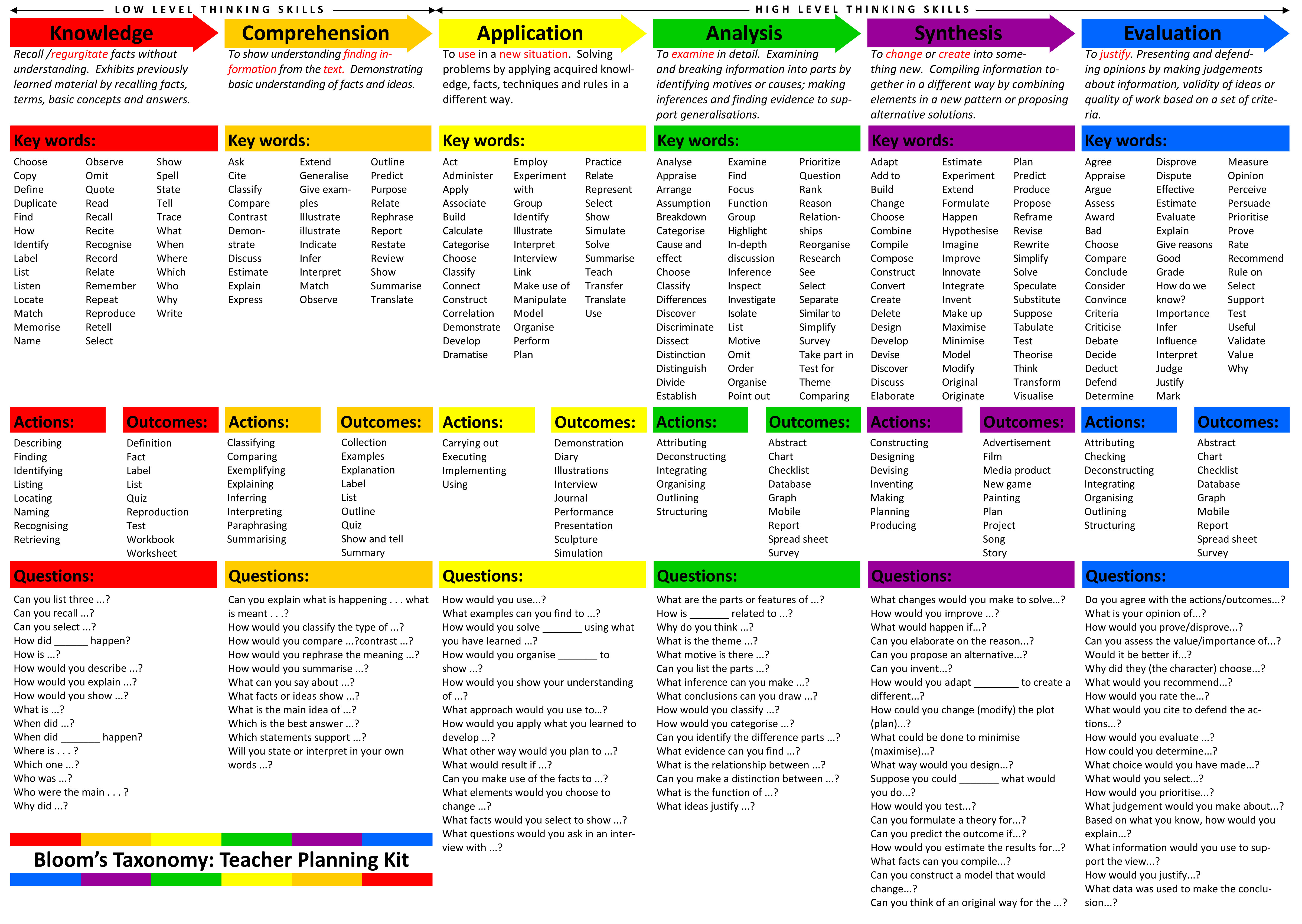
"Structure of Observed Learning Outcomes" - Links into Blooms, with the pedagogy extending student's critical thinking skills.

Click on image for larger viewable size. Source: http://www.educatorstechnology.com
Discussion Points:
  • What is constructivism?
  • What are the five levels of SOLO?
  • How can this link to practise in the classroom? 
Reading: "What is Constructivism?"
Comments:
  • It's a great article - allows us to make links to our own prior knowledge, constructivism;
  • We often need to adopt different roles within the classroom;
  • A way to engage our students/community of learning and have a clear understanding of where we're going!
  • We know the difference between LI and SCs, the importance of talkalouds, modelling books etc-
  • We're digging deeper - recognising that our children need to develop their critical thinking skills;
  • Takes Blooms Taxonomy to the next level -
  • Learners co-construct their knowledge - if we don't have a 'hook' for something to link it into, the knowledge falls away...
  • Thinking critically - do I need to change my view / understanding? Is this information relevant
  • Learn Create Share links to second paragraph - along with formative practise, knowing you students well. Might look at this as a spiral, also (i.e.: Spiral of Inquiry);
  • In closing, the article notes "constructivism taps into and triggers the student's innate curiosity about the world and how things work. Students do not reinvent the wheel but, rather, attempt to understand how it turns, how it functions. They become engaged by applying their existing knowledge and real-world experience, learning to hypothesize, testing their theories, and ultimately drawing conclusions from their findings."


book Image
Resource Used

Introducing SOLO Taxonomy 
(article cited from Pam Hook's book as per image above, published by Essential Resources Educational Publishers Ltd, 2011, pp. 5-6)

Next steps: trial this instructional approach in your classroom - through Inquiry / Literature, and including the use of SOLO hand signals across the school. Will arrange to have visual cue cards / laminated in folders to begin to introduce these - to begin to help our students to express where they are at with their learning

Key for the five SOLO levels (Pam Hook 2011, pp.3-4). The first is emergent, the next two are quantitiative, with the final two being qualitative i.e.: as students move from learning, through researching/knowing to deeper 'critical thinking' along the continuum.

PLD Activity: Discussion of "George" Case Study, to help us understand what each of the five SOLO levels looks like for our learners.
http://pamhook.com/
Resource used: "A Children's Guide to SOLO Taxonomy: Five Easy Steps to Deep Learning" by Pam Hook, 2011.

Other Recommended Readings (Online Source)
"Where To Next When Introducing SOLO Taxonomy and Hot Maps"

Monday, 18 January 2016

Mindlab by Unitec: Reflecting on My Learning and Practise

18 January 2016 (APC Week 25, Tasks1-3)
My Reflective Journal
Kia ora, my name is Marla Jane, and I am a primary school teacher in South Auckland, New Zealand. 
   I have been teaching at my current kura (school) for nearly eight years now; I have had the good fortune to have taught across the school as a classroom teacher for akonga (students) from Year 2 to Year 6 during my time as a kiako (teacher) there. 
   I've been teaching within the senior syndicate for the past few years, so I get to work with students from Year 4-8 as we move into innovative learning environments and full immersion digital platforms through the Papakura Kootuitui initiative in 2016.
   As part of my role within our community of learning, I have been actively involved in co-developing ICT-related practises, most recently around our class blog and learning hub website.
   To keep up-to-date with the goings on in education in the 21st Century, I also keep a pinterest board and interact with other educators through my own Google+ and Twitter accounts 'in my spare time'. 
   Then, of course, we arrive at this blog, which I've created in the past year to keep track of all my professional learning: from professional learning and development in the workplace, through to educational conferences; and most recently, during the Mindlab By Unitec PGCert course. 
   Beyond my obvious strong interest in "all things ICT", my other passion is for Visual Art - from teaching and learning about it, through to sharing my creations with the wider 'globe'.

My Learning and Practice
   I have created this blog post to reflect on the last 24 weeks of my PCGCert studies at Mindlab by Unitec. To begin, let me start with 'a critical discussion' of two of my own Key Competencies that I believe have been developed the most during my studies the past several months.
My Original Reflection - cut and pasted from our Google Form made in August 2015.
   Reflecting on my initial comments in August 2015, one of the most striking contrasts for me over the past several months has been how my pre-existing 'Participating and Contributing' competency has proven to be a real asset when undertaking both e-Learning and professional networking.   

   My locus of interest has greatly expanded over recent months - from discussions with my fellow post grad students, through to my relatively new use of Twitter as a way to foster networks and source innovative ideas in ever-changing professional leading and learning contexts. 

   Along with this post graduate course itself, experiencing ULearn'15 allowed me to confidently approach educators from a wide variety of professional settings. 

    Another noticable change has been in how my 'Thinking' key competency has been opened up even further by this discourse and sharing of such a broad, expansive and increasingly globalised view of education as it is now occuring in the present tense.
 
   Other key changes that I have noticed within my own pedagogical practise since starting this course include how my use of online networking and cloud-based tools and resources have all effectively become an intrinsic part of how I gather, learn, create, share and reflect on my teaching and learning.

My Response to Finlay’s (2008) article 
In Lynda Finlay's (2008) article "Reflecting on Reflective Practise", she paraphrases Zeichner and Liston (1996) as saying that the reflective practise can effectively occur at five different levels:
  1. rapid reflection - responding to the immediate contexts within the learning setting;
  2. repair - adjusting teacher responses and behaviours in light of different student cues;
  3. review - thinking, verbalising or writing about aspects of one's teaching;
  4. research - engaging in a longitudinal view of one's pedagogy through a process of traingulation of assessment data, professional readings and other professional sources of information;
  5. retheorising and reformulating - adjusting one's professional thinking and pedagogy in response to all of the above.
This particular hierarchy of reflective thought aligns well with my own learning experiences around the professional reflections at this juncture. Within my own professional teaching and learning, the model that we endeavour to use is identifed as Teaching As Inquiry.

   This process aligns with my professional obligations in regards to meeting my own goals within my teaching practise, and the model itself essentially provides me with a clear picture of "where I am, what has worked, what didn't work, and what my nexts steps would be". The process of review is complimented by my being able to discuss these different steps within my syndicate and as part of my professional appraisal cycle. 

Teaching as inquiry model.
Source: Teaching As Inquiry (TKI website image)
Teaching As Inquiry effectively gives me a clear, definable platform on which to best develop the professional skills and reflective approach needed in an ever changing world of learning and leading.


   Looking at Finlay's discussion around the concepts of reflexivity and critical reflection also align well with how the practise often necessarily occurs within learning environments where 'value-added' appraoches are explicit in the pedaogogical setting in which teaching occurs.

   "Reflexive practitioners engage in critical self-reflection: reflecting critically on the impact of their own background, assumptions, positioning, feelings, behaviour while also attending to the impact of the wider organisational, discursive, ideological and political context." (Finlay, 2008)

   It is necessary that we understand the contexts in which we teach, and the wider influences on both ourselves and our learning community of learning - from our immediate students who need both our informed empathy and guidance, through to the over-arching educational bodies that govern our practise.

   As we seek to provide our learners and our colleagues with the tools they need to live and learn within a globalised educational context, it is important that each of us is able to confidently approach and then master the skills we all need to be 'digital citizens' of the new millenium.

References Cited
(not directly cited unless undelined as above - citations include suggested readings for creating your own reflective learning journal.)
Dawson, F. (2012, October 10). Reflective practice. [video file].
Finlay, L. (2009) Reflecting on reflective practice. PBPL. [PDF file]
Galanis, M (2014, November 4). Blogging in Education. [video file]
Godin, S. (2015). The tribes we lead. Ted.com. [Web blog post].
Goins, J.(2015). How to Write Scannable Content for Your Blog. [Web blog post]
Gunelius, S. (2015). The Secrets of Blog Post Length. About.com Tech. [Web blog post]
Gunelius, S. (2015). Legal Issues Bloggers Must Understand. About.com Tech. [Web blog post]
Gunelius, S. (2015). 3 Expert Tips for Better Blogging. About.com Tech. [Web blog post]
LSU Center for Academic Success (2013, March 26). Think about Thinking - It’s Metacognition!. [video file].
Trinity,A. ( 2010, April 19,). Reflection Models. [video file].
Walker, J. (2012, February 17). Brief Intro to Metacoginition. [video file].
Zeichner, K. M., & Liston, D. P. (1996). "Reflective teaching. An introduction. Reflective teaching and the social conditions of schooling".